Basketball Stat Tracking
The basketball stat tracker that retires the paper scorebook
ScoreLM is a basketball stat tracker built for the person running the whole league. Enter one box score from the bench (points, rebounds, assists, steals, blocks, turnovers) and season stats, leaderboards, standings, and every player profile on your public league site update instantly. You never re-type a number into a spreadsheet, and the scorebook stops living in somebody's bag.
One Entry, Everything Updates
A basketball stat tracker that feeds everything else
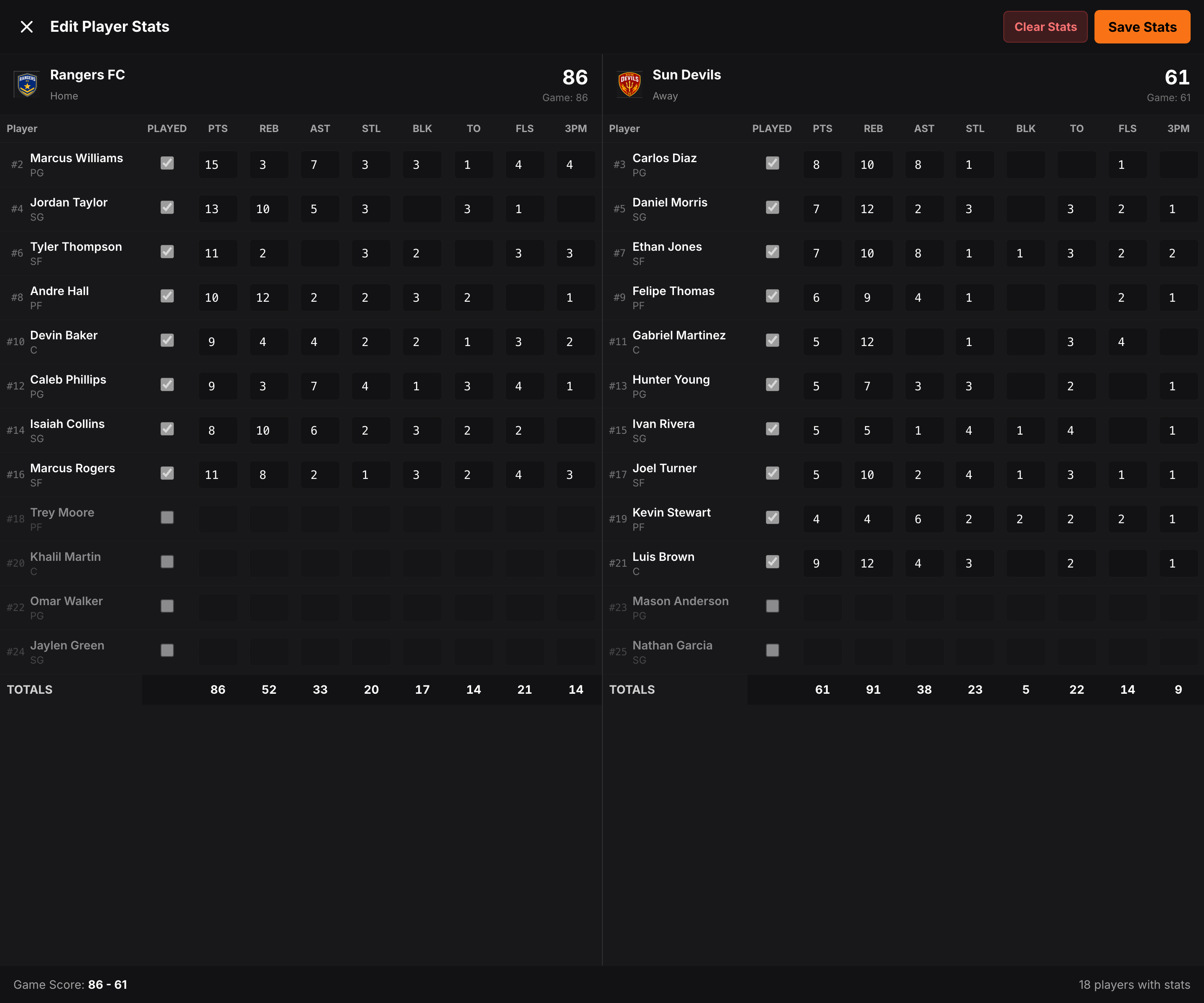
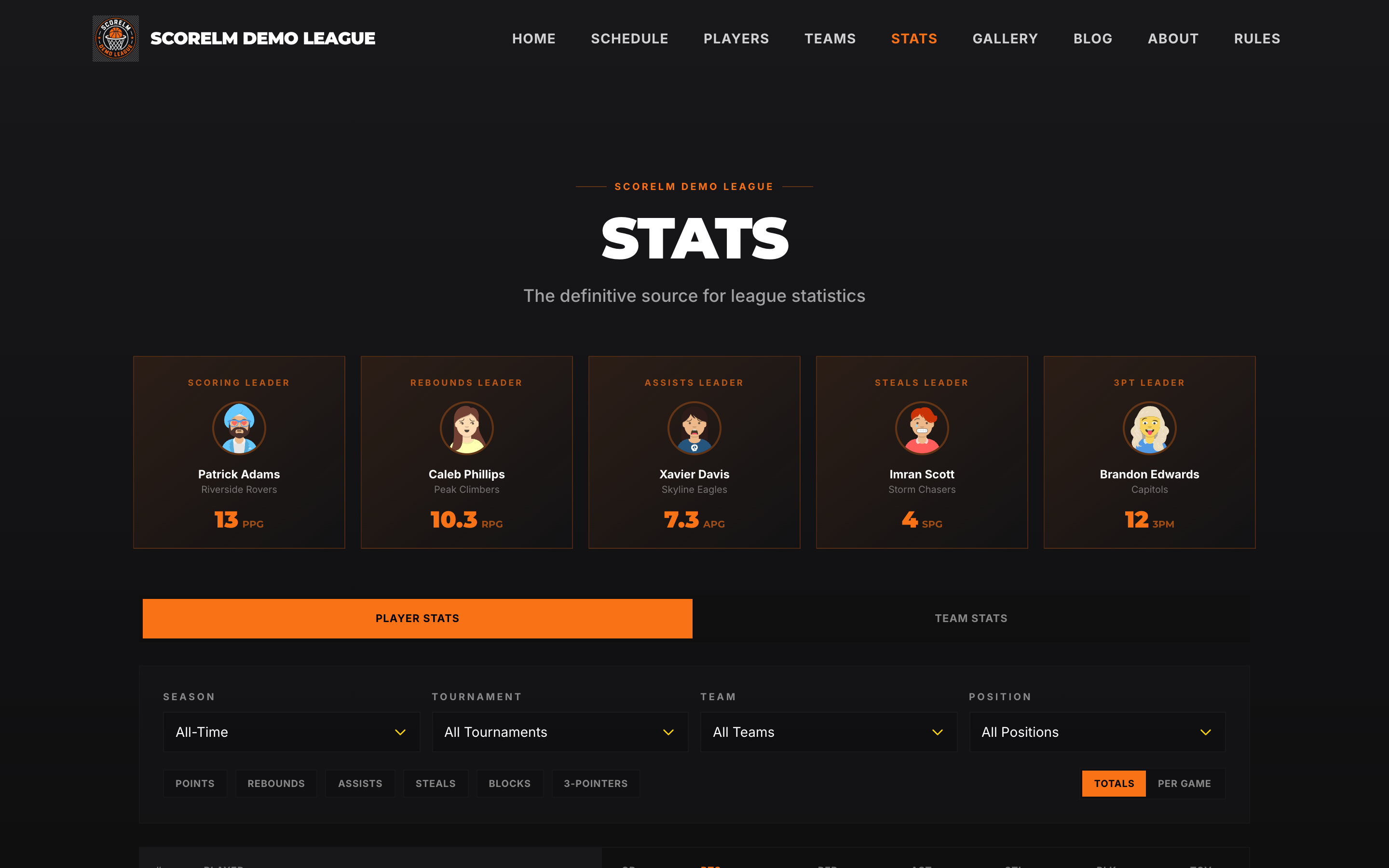
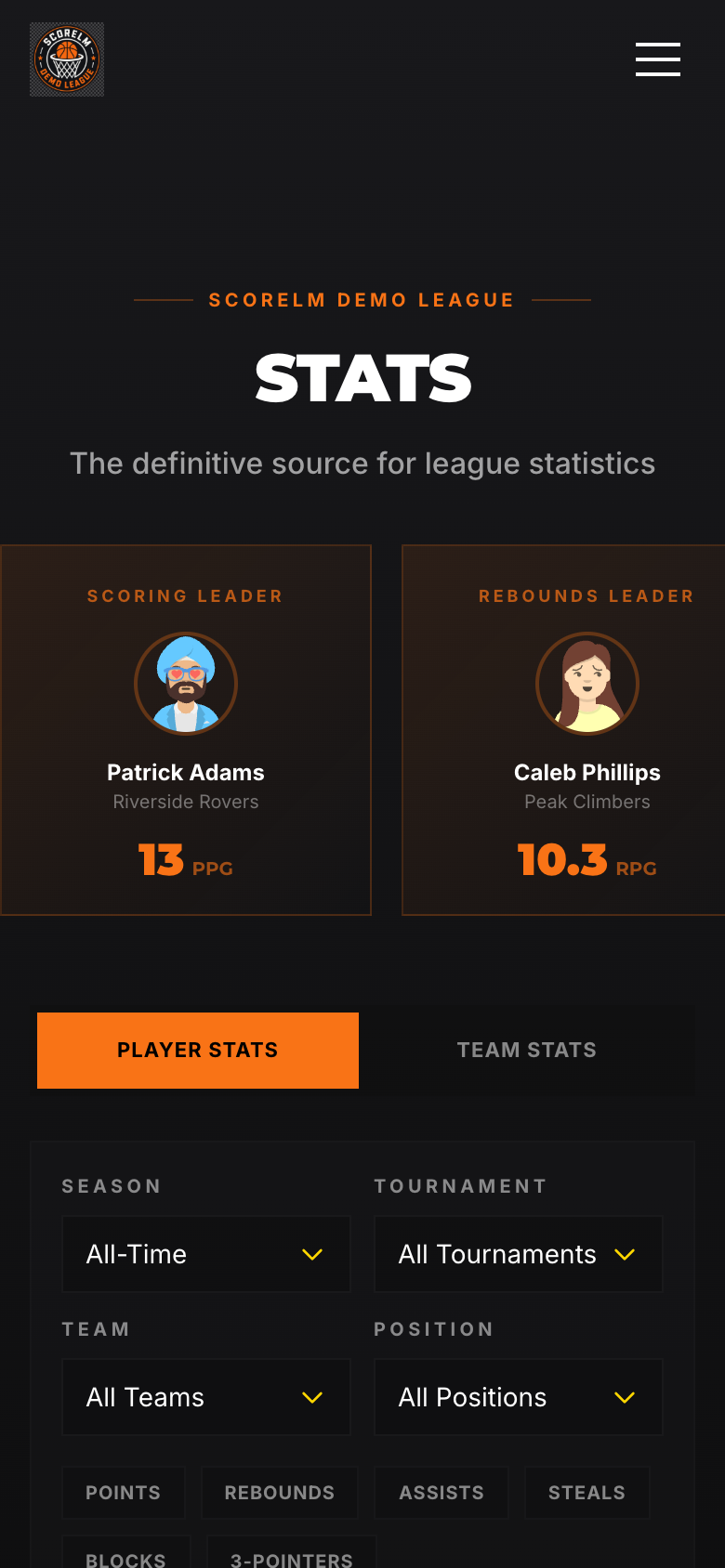
Most stat apps stop at the box score. In ScoreLM, the box score is the source for the entire league site: season totals, per-game averages, sortable leaderboards, standings, and public player profiles are all computed live from the game lines you enter. There's no separate totals sheet that can fall out of sync. The full entry workflow, including DNP handling, is in the box scores and stats guide.
Ninety-Second Entry
The entry screen is a spreadsheet-style grid, with rosters in rows and your tracked categories in columns. Tab through, type the line off your scoresheet, hit save. A clean box score takes about ninety seconds once you're in the rhythm.
Instant Aggregation
Season totals, per-game averages, and leaderboard rankings recalculate the moment you save. Players and fans see the updated numbers on the public site seconds later, without any publishing step.
Reconciled Against the Final Score
Player points are checked against the recorded game score before you save. If they don't add up, the basketball stat tracker tells you exactly how many points you're off before the typo ever reaches a leaderboard.
Player Profiles
Career stats that follow players everywhere
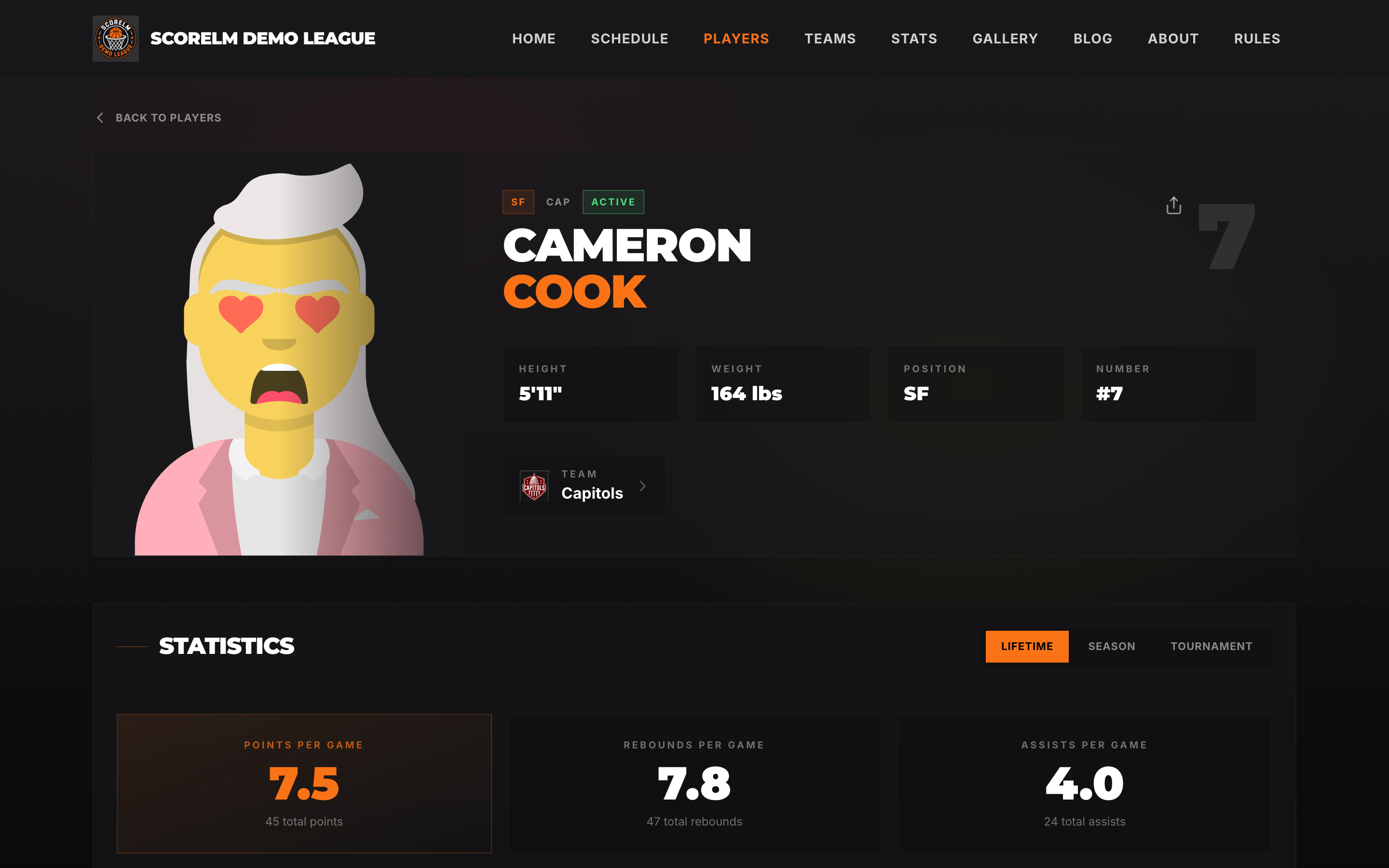
Every player gets a public profile page with their headshot, career stats, and a game-by-game log. Career numbers follow players across seasons and across teams, so the guy who switched squads in year three keeps his full history. This is where a basketball stat tracker earns its keep over a coach's notebook: players and parents get a live, shareable page instead of asking what the scorebook says. ScoreLM was built for the Muslim Champions League, a basketball organization with hundreds of competitive players, and those players check their pages constantly.
Across Seasons and Teams
Stats are tracked per season and roll up into career numbers. Compare a player's seasons side by side, even when the tracked categories changed between them.
A Page Worth Sharing
Each profile is a clean public URL with a headshot, season tables, and a game log. A player can drop it in a group chat or send it to anyone who asks how their season is going.
No App, No Account
The league site is mobile-first and loads in any browser. Parents don't download anything or create an account. A bookmarked link is the whole experience.
Why a basketball stat tracker beats the paper scorebook
You already know how this goes: the scorebook lives in one person's bag, the spreadsheet has a broken formula from week four, and nobody but the commissioner can see any of it. The table below puts the same weekly work side by side.
A basketball stat tracker is one layer of running a league. The same box scores power your standings, game detail pages, and the rest of your basketball league management software. When the season ends in a playoff, the same platform runs the tournament brackets.
If you're comparing options for a youth club, start with our breakdown of the best all-in-one league management app for youth basketball clubs.
Built for Real Scorers
Track what your scorers can actually count
Not every league can track shooting splits from a folding chair at half-court. A basketball stat tracker that demands the full NBA stat line just guarantees empty columns and burned-out volunteers. So you choose. Toggle on the categories your bench can realistically count (points, rebounds, assists, steals, blocks, and turnovers are the usual core) and the entry grid and every public page hide the rest.
Pick Your Categories
Enable or disable stat categories per season. Percentage columns like FG% and 3P% appear only when you're tracking the corresponding attempts, which keeps blank columns out of the grid.
Fix Mistakes After the Fact
When you spot a typo three days later, reopen the game, change the number, and save. Every leaderboard adds up box scores on the fly, so one correction propagates through the whole season automatically.
Bulk CSV Import
If you're migrating mid-season, import rosters from a CSV. A preview mode shows which rows will create, update, or skip before anything saves. Then enter box scores game by game.
DNPs Handled Honestly
Per-game averages divide by games actually played, so a DNP never drags down a player's PPG. It's the kind of detail a basketball stat tracker has to get right for the numbers to be trusted.
Frequently asked questions
Do I have to track every stat category?
No. You pick the categories your scorers can realistically count each season, and many leagues track just points, rebounds, and assists. Columns you disable disappear from the entry grid and from every leaderboard, and percentage columns like FG% only appear when you're tracking the corresponding attempts.
What happens when a scorer makes a mistake?
Open that game's box score, fix the number, save. Every stat in ScoreLM is computed live from box scores, so the season leaderboard, the standings, and the player's averages all reflect the correction automatically, even for a game from three weeks ago. There's no separate totals table to rebuild.
Can I import data from a spreadsheet?
Yes. Bulk CSV import gets rosters loaded fast, with a preview that shows exactly which rows will be created, updated, or skipped before anything is saved. From there you enter box scores per game, and the basketball stat tracker builds season totals, averages, and leaderboards from them.
Does ScoreLM only do basketball?
Basketball and soccer are supported today. Soccer gets its own box score model covering goals, assists, cards, and clean sheets. Volleyball, hockey, football, and futsal are on the roadmap.
How much does it cost?
You get the first 15 days free, and we don't ask for a credit card to start. After the trial, the early bird price is $17/month billed annually ($204/year). That's one flat rate per league and it covers unlimited teams and players.
Put the paper scorebook in a drawer
Signup takes about a minute and provisions your league site on its own subdomain. Enter tonight's box score and watch the whole basketball stat tracker light up. It's free for the first 15 days and you won't need a credit card.